

Florence Christophers
B.A., M.Phil. | Registered Health Coach | Somatic Experiencing® Trauma Practitioner
Florence Christophers
B.A., M.Phil. | Registered Health Coach |
Somatic Experiencing® Trauma Practitioner
Florence Christophers
B.A., M.Phil. | Registered Health Coach |
Somatic Experiencing® Trauma Practitioner
Hello, I'm Florence!
I bring 20+ years of experience walking and working in the food addiction, trauma, and disordered eating space. In addition, I have Bachelor's and Master's degrees, as well as certification as a Health Coach, and a Somatic Experiencing™ Trauma Practitioner. I describe myself as a trauma-informed food recovery coach.
I work both top-down (clarity, intention, accountability) and bottom-up (nervous system safety, pacing, regulation) to heal your relationship with food and restore your metabolic and mental health.

Hello, I'm Florence!
I bring 20+ years of experience walking and working in the food addiction, trauma, and disordered eating space. In addition, I have Bachelor's and Master's degrees, as well as certification as a Health Coach, and a Somatic Experiencing™ Trauma Practitioner. I describe myself as a trauma-informed food recovery coach.
I work both top-down (clarity, intention, accountability) and bottom-up (nervous system safety, pacing, regulation) to heal your relationship with food and restore your metabolic and mental health.

Hello, I'm Florence!
I bring 20+ years of experience walking and working in the food addiction, trauma, and disordered eating space. In addition, I have Bachelor's and Master's degrees, as well as certification as a Health Coach, and a Somatic Experiencing™ Trauma Practitioner. I describe myself as a trauma-informed food recovery coach.
I work both top-down (clarity, intention, accountability) and bottom-up (nervous system safety, pacing, regulation) to heal your relationship with food and restore your metabolic and mental health.

My Story...
I’ve been on my own recovery path for over 25 years. Like many of my clients, I spent years trapped in cycles of dieting, restriction, and bingeing on ultra-processed foods. Today, I gratefully eat whole foods (rare exceptions aside). I have maintained a 40+lb weight loss for more than three decades. And I have reversed a long list of health conditions, including migraines, rosacea, depression, bladder infections, skin cancer, cystic acne, and more.
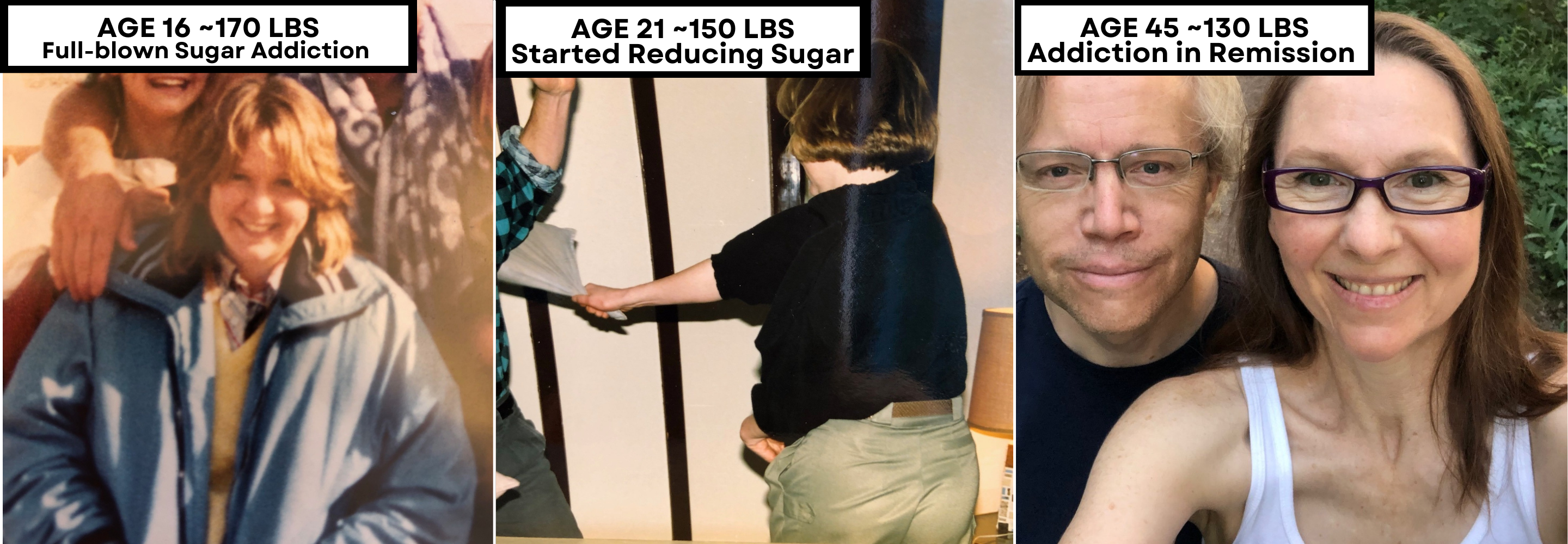
My freedom didn’t come quickly or easily. It came through decades of trial and error.
I tried therapy, books, supplements, retreats, 12-step meetings, and countless diets. I could stay abstinent for stretches — but it required intense vigilance. Eventually, the pull back to sugar would overpower my best efforts.
Everything changed when I discovered Rational Recovery and Jack Trimpey's work. For the first time, I could observe urges without acting on them. Abstinence felt natural. I sustained it effortlessly for nearly five years and believed I was fully recovered.
But I wasn’t.
One winter night, in a moment of deep fear, I relapsed. I returned to meetings, to sponsors, to every strategy I knew — but nothing restored sustained abstinence.
That season broke something open in me.
I began to see that abstinence alone is not recovery.
Food was never the whole issue. The deeper work — the nervous system work, the trauma work, the chronic fear and overwhelm that had always been running beneath the surface — was now impossible to ignore. It was making it impossible to stay abstinent. It was demanding my full attention.
My relapse pushed me to do the trauma recovery work I later became certified in.
Today I understand that abstinence can be a powerful tool. Harm reduction can work too. But food, for many of us, is only one piece of a much larger puzzle.
I am grateful for my relapse. It led me into deeper recovery work. It forced me to understand the role that chronic fear, stress, and overwhelm play in addiction — and the necessity of addressing them as an essential part of food recovery. Food triggers trauma. And trauma triggers food. This vicious cycle I needed to overcome. Removing the food does not heal the trauma. Somatic work does.
Today, my recovery is NOT sustained by a fear of relapse or a fear of food, but in a felt sense of safety, possibility, and love for my body. My life is now getting better and better. And yours can too.
My Story...
I’ve been on my own recovery path for over 25 years. Like many of my clients, I spent years trapped in cycles of dieting, restriction, and bingeing on ultra-processed foods. Today, I gratefully eat whole foods (rare exceptions aside). I have maintained a 40+lb weight loss for more than three decades. And I have reversed a long list of health conditions, including migraines, rosacea, depression, bladder infections, skin cancer, cystic acne, and more.
My freedom didn’t come quickly or easily. It came through decades of trial and error.
I tried therapy, books, supplements, retreats, 12-step meetings, and countless diets. I could stay abstinent for stretches — but it required intense vigilance. Eventually, the pull back to sugar would overpower my best efforts.
Everything changed when I discovered Rational Recovery and Jack Trimpey's work. For the first time, I could observe urges without acting on them. Abstinence felt natural. I sustained it effortlessly for nearly five years and believed I was fully recovered.
But I wasn’t.
One winter night, in a moment of deep fear, I relapsed. I returned to meetings, to sponsors, to every strategy I knew — but nothing restored sustained abstinence.
That season broke something open in me.
I began to see that abstinence alone is not recovery.
Food was never the whole issue. The deeper work — the nervous system work, the trauma work, the chronic fear and overwhelm that had always been running beneath the surface — was now impossible to ignore. It was making it impossible to stay abstinent. It was demanding my full attention.
My relapse pushed me to do the trauma recovery work I later became certified in.
Today I understand that abstinence can be a powerful tool. Harm reduction can work too. But food, for many of us, is only one piece of a much larger puzzle.
I am grateful for my relapse. It led me into deeper recovery work. It forced me to understand the role that chronic fear, stress, and overwhelm play in addiction — and the necessity of addressing them as an essential part of food recovery. Food triggers trauma. And trauma triggers food. This vicious cycle I needed to overcome. Removing the food does not heal the trauma. Somatic work does.
Today, my recovery is NOT sustained by a fear of relapse or a fear of food, but in a felt sense of safety, possibility, and love for my body. My life is now getting better and better. And yours can too.
My Story...
I’ve been on my own recovery path for over 25 years. Like many of my clients, I spent years trapped in cycles of dieting, restriction, and bingeing on ultra-processed foods. Today, I gratefully eat whole foods (rare exceptions aside). I have maintained a 40+lb weight loss for more than three decades. And I have reversed a long list of health conditions, including migraines, rosacea, depression, bladder infections, skin cancer, cystic acne, and more.
My freedom didn’t come quickly or easily. It came through decades of trial and error.
I tried therapy, books, supplements, retreats, 12-step meetings, and countless diets. I could stay abstinent for stretches — but it required intense vigilance. Eventually, the pull back to sugar would overpower my best efforts.
Everything changed when I discovered Rational Recovery and Jack Trimpey's work. For the first time, I could observe urges without acting on them. Abstinence felt natural. I sustained it effortlessly for nearly five years and believed I was fully recovered.
But I wasn’t.
One winter night, in a moment of deep fear, I relapsed. I returned to meetings, to sponsors, to every strategy I knew — but nothing restored sustained abstinence.
That season broke something open in me.
I began to see that abstinence alone is not recovery.
Food was never the whole issue. The deeper work — the nervous system work, the trauma work, the chronic fear and overwhelm that had always been running beneath the surface — was now impossible to ignore. It was making it impossible to stay abstinent. It was demanding my full attention.
My relapse pushed me to do the trauma recovery work I later became certified in.
Today I understand that abstinence can be a powerful tool. Harm reduction can work too. But food, for many of us, is only one piece of a much larger puzzle.
I am grateful for my relapse. It led me into deeper recovery work. It forced me to understand the role that chronic fear, stress, and overwhelm play in addiction — and the necessity of addressing them as an essential part of food recovery. Food triggers trauma. And trauma triggers food. This vicious cycle I needed to overcome. Removing the food does not heal the trauma. Somatic work does.
Today, my recovery is NOT sustained by a fear of relapse or a fear of food, but in a felt sense of safety, possibility, and love for my body. My life is now getting better and better. And yours can too.

My Approach
After more than two decades of healing my own addictions—and years working in the recovery field—I now know that healing our relationship with food happens best when we focus on self-regulation instead of restriction rooted in fear.
My approach is nervous system-centric. It is grounded in the understanding that addiction and disordered eating are layered and complex. Their roots reach deep.
Through skill-building, daily accountability, structure, and somatic support, I help clients move beyond rigid rules toward aligned choices.
Abstinence is foundational to my work but not a requirement. Abstinence stabilizes the body and quiets the chaos so deeper healing can begin. But abstinence is not the end goal, nor is it the whole story.
My role is to provide structure, skill, and compassionate accountability while you learn to regulate your nervous system, process emotions and achieve your desired outcomes. I am not here to fix you. You are not broken.
I am here to help you build nervous system safety and resiliency so recovery becomes sustainable.

My Approach
After more than two decades of healing my own addictions—and years working in the recovery field—I now know that healing our relationship with food happens best when we focus on self-regulation instead of restriction rooted in fear.
My approach is nervous system-centric. It is grounded in the understanding that addiction and disordered eating are layered and complex. Their roots reach deep.
Through skill-building, daily accountability, structure, and somatic support, I help clients move beyond rigid rules toward aligned choices.
Abstinence is foundational to my work but not a requirement. Abstinence stabilizes the body and quiets the chaos so deeper healing can begin. But abstinence is not the end goal, nor is it the whole story.
My role is to provide structure, skill, and compassionate accountability while you learn to regulate your nervous system, process emotions and achieve your desired outcomes. I am not here to fix you. You are not broken.
I am here to help you build nervous system safety and resiliency so recovery becomes sustainable.

My Approach
After more than two decades of healing my own addictions—and years working in the recovery field—I now know that healing our relationship with food happens best when we focus on self-regulation instead of restriction rooted in fear.
My approach is nervous system-centric. It is grounded in the understanding that addiction and disordered eating are layered and complex. Their roots reach deep.
Through skill-building, daily accountability, structure, and somatic support, I help clients move beyond rigid rules toward aligned choices.
Abstinence is foundational to my work but not a requirement. Abstinence stabilizes the body and quiets the chaos so deeper healing can begin. But abstinence is not the end goal, nor is it the whole story.
My role is to provide structure, skill, and compassionate accountability while you learn to regulate your nervous system, process emotions and achieve your desired outcomes. I am not here to fix you. You are not broken.
I am here to help you build nervous system safety and resiliency so recovery becomes sustainable.
The very thing that feels helpful in the moment (sugar) slowly deepens the dysregulation underneath. A body regularly flooded with sugar becomes more stressed, more inflamed, more fatigued, and more overwhelmed.
You already know that. But here's the thing...
Food triggers trauma. And trauma triggers food. It's a two-way street.
This is the vicious cycle we need to break. I will show you how.
The very thing that feels helpful in the moment (sugar) slowly deepens the dysregulation underneath. A body regularly flooded with sugar becomes more stressed, more inflamed, more fatigued, and more overwhelmed.
You already know that. But here's the thing...
Food triggers trauma. And trauma triggers food.
It's a two-way street. This is the vicious cycle we need to break.
I will show you how.
The very thing that feels helpful in the moment (sugar) slowly deepens the dysregulation underneath. A body regularly flooded with sugar becomes more stressed, more inflamed, more fatigued, and more overwhelmed.
You already know that.
But here's the thing...
Food triggers trauma.
And trauma triggers food.
It's a two-way street. This is the
vicious cycle we need to break.
I will show you how.
Looking For More Information On My Approach?
Watch my free 3+ hour webinar on how trauma complicates
food recovery and can lead to ongoing struggle. I hope you enjoy it!
Looking For More Information
On My Approach?
Watch my free 3+ hour webinar on how trauma complicates food recovery and can lead to ongoing struggle. I hope you enjoy it!
Looking For More Information
On My Approach?
Watch my free 3+ hour webinar on how trauma complicates food recovery and can lead to ongoing struggle. I hope you enjoy it!
"Simple somatic exercises can make a profound difference in your food recovery journey. As you learn to be with feelings and sensations in new and better ways, as you make progress towards greater nervous system settling, you will also make remarkable progress with your food. Real progress. Lasting progress. This approach can feel like a miracle — but it isn’t.
It is recovery happening at a deeper level."
~Florence Christophers
"Simple somatic exercises can make a profound difference in your food recovery journey. As you learn to be with feelings and sensations in new and better ways, as you make progress towards greater nervous system settling, you will also make remarkable progress with your food. Real progress. Lasting progress. This approach can feel like a miracle — but it isn’t.
It is recovery happening at a deeper level."
~Florence Christophers
"Simple somatic exercises can make a profound difference in your food recovery journey. As you learn to be with feelings and sensations in new and better ways, as you make progress towards greater nervous system settling, you will also make remarkable progress with your food. Real progress. Lasting progress. This approach can feel like a miracle — but it isn’t.
It is recovery happening at a deeper level."
~Florence Christophers
Better Health Coaching, Inc.
✉️ support@florencechristophers.com
📞 +1 403-540-0648
📍 560 10th Ave West, Melville, SK S0A 2P0, Canada




QUICK LINKS:
• HOME
• ABOUT
• CONTACT
• SERVICES
• TESTIMONIALS
• REFUND POLICY
DISCLAIMER: The contents of this website are for informational and inspirational purposes only. They are not a substitute for professional medical advice, diagnosis, or treatment. It is your responsibility to work with a health care practitioner familiar with your specific medical needs. Always seek the advice of your physician or other qualified health provider before, during and after making lifestyle changes. They can affect your prescriptions and symptoms. We do not advocate any particular way of eating beyond the importance of eliminating ultra-processed foods. You decide which whole-food meal plan works for you. We also do not insist on abstinence and recognize the value of a harm-reduction approach especially when trauma is in play.
© FlorenceChristophers.com • All Rights Reserved
Better Health Coaching, Inc.
✉️ support@florencechristophers.com
📞 +1 403-540-0648
📍 560 10th Ave West, Melville, SK S0A 2P0, Canada
QUICK LINKS:
HOME • ABOUT • CONTACT • SERVICES • TESTIMONIALS • REFUND POLICY
DISCLAIMER: The contents of this website are for informational and inspirational purposes only. They are not a substitute for professional medical advice, diagnosis, or treatment. It is your responsibility to work with a health care practitioner familiar with your specific medical needs. Always seek the advice of your physician or other qualified health provider before, during and after making lifestyle changes. They can affect your prescriptions and symptoms. We do not advocate any particular way of eating beyond the importance of eliminating ultra-processed foods. You decide which whole-food meal plan works for you. We also do not insist on abstinence and recognize the value of a harm-reduction approach especially when trauma is in play.
© FlorenceChristophers.com • All Rights Reserved
Better Health Coaching, Inc.
✉️ support@florencechristophers.com
📞 +1 403-540-0648
📍 560 10th Ave West, Melville, SK S0A 2P0, Canada
QUICK LINKS:
HOME • ABOUT • CONTACT • SERVICES • TESTIMONIALS • REFUND POLICY
DISCLAIMER: The contents of this website are for informational and inspirational purposes only. They are not a substitute for professional medical advice, diagnosis, or treatment. It is your responsibility to work with a health care practitioner familiar with your specific medical needs. Always seek the advice of your physician or other qualified health provider before, during and after making lifestyle changes. They can affect your prescriptions and symptoms. We do not advocate any particular way of eating beyond the importance of eliminating ultra-processed foods. You decide which whole-food meal plan works for you. We also do not insist on abstinence and recognize the value of a harm-reduction approach especially when trauma is in play.
© FlorenceChristophers.com
• All Rights Reserved •